

Below The Hook Lifting Devices
Below-the-hook lifters are purpose-built devices that are engineered to handle materials in a way that promotes safety and efficiency. From moving steel coils through a processing facility to placing precast concrete barriers on a highway project, the right below-the-hook device helps keep loads stable, protects the material surface, and reduces rigging time on every pick.
Fulcrum Lifting supplies below-the-hook lifting devices built to ASME B30.20 standards from manufacturers such as The Crosby Group®, Caldwell Lifting Solutions, Peerless, Industrial Magnets, and M&W Machining & Welding.

Types of Below-the-Hook Lifters
We offer below-the-hook lifting devices to fit a wide range of load types and working environments. Types of below-the-hook lifters include:
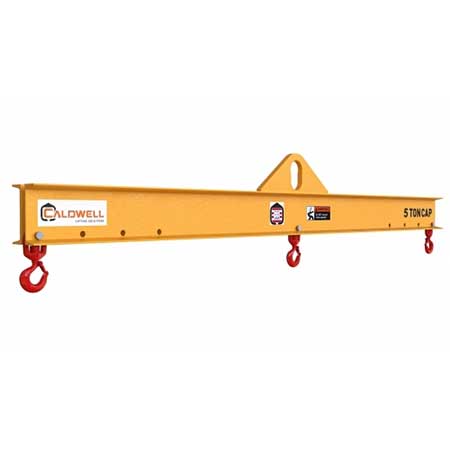
Lifting Beams
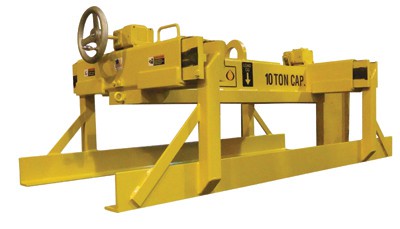
Lifting beams are single-point suspension devices designed for lifts where headroom is limited. They accept a single overhead pick point and distribute the load to multiple attachment points below, keeping sling angles wide and protecting loads that cannot tolerate inward compression forces. Standard and adjustable configurations are available for loads of varying length and capacity requirements.
Not sure whether to use a Lifting Beam or a Spreader Bar? Read our guide to learn which is best for your application.
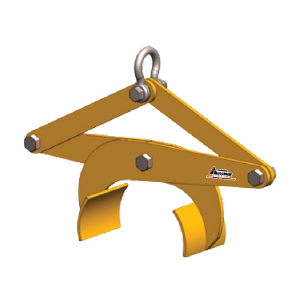
Lifting Tongs
Lifting tongs use a cam or scissor-action jaw to grip the load, engaging more securely as the lift load increases. They are well-suited for handling bars, billets, bundled material, and structural sections in steel mills, fabrication shops, and general material handling environments where fast, repeatable pick cycles are required.
Roll Lifters
Roll lifters engage the core mandrel of a roll to allow lifting, transport, and positioning without contact with the outer material surface. Available in C-hook and mandrel-style configurations, roll lifters are a standard tool in paper mills, textile operations, and metal processing facilities where protecting the outer layers of a roll during handling is critical.
Sheet Lifters
Sheet lifters handle flat material, including steel plate, aluminum sheet, and similar stock, where edge or face contact is required to make the pick. Available in horizontal and tilting configurations, they give operators precise control over load orientation during placement and are used across steel distribution, fabrication, and heavy manufacturing environments.
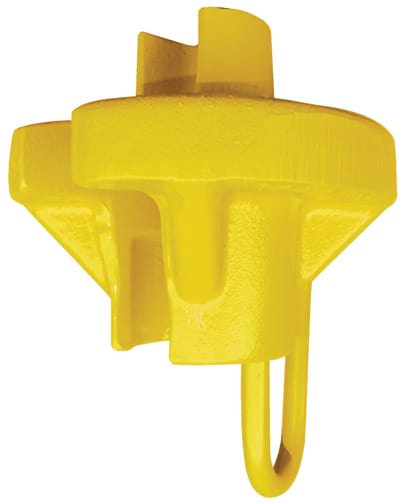
Concrete Barrier Lifters
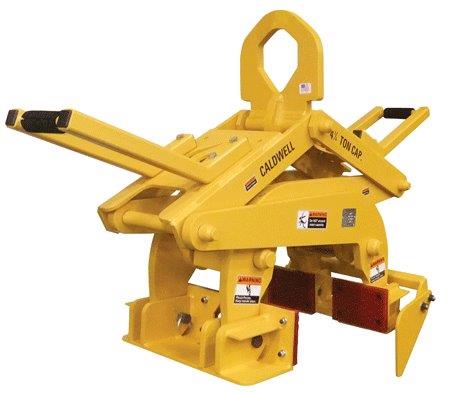
Concrete barrier lifters, also known as barrier grabs, are purpose-built for picking, placing, and repositioning precast concrete road barriers and median dividers. Their design allows for quick, secure engagement without manual connections at the load, making them a practical tool for highway construction, traffic management, and infrastructure maintenance operations.
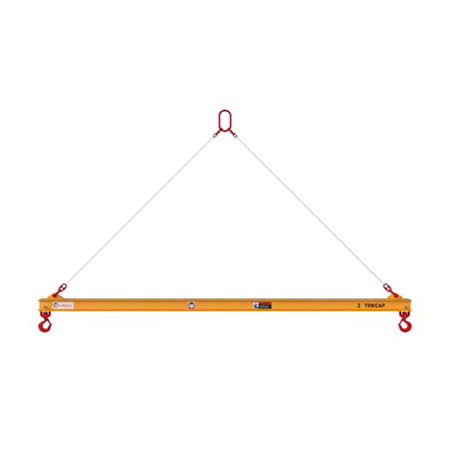
Spreader Beams
Spreader beams are rigged in two-point suspension and work in compression to push rigging outward, eliminating inward sling forces on the load. This makes them the preferred choice for lifting tanks, vessels, structural sections, and long loads where load geometry must be maintained throughout the lift. Modular and adjustable spreader beams are available for operations that handle varying load sizes.
Pipe Lifters
Pipe lifters are designed to cradle and support cylindrical loads during lifting and transport without damaging or deforming the outer surface. They provide a stable, controlled hold on pipe of varying diameters and are a practical choice for pipeline construction, fabrication yards, and industrial maintenance operations where protecting the pipe surface or coating is a requirement.
Coil Lifters
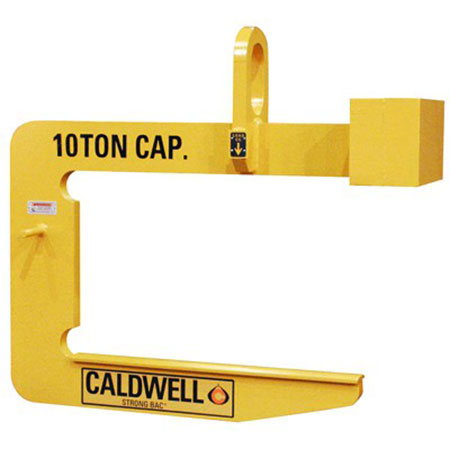
Coil lifters, also known as C-hooks, handle coiled material by passing through the eye of the coil and supporting the load from beneath. Available in configurations for horizontal and vertical coil orientation, coil lifters are a common fixture in steel service centers, stamping facilities, and metal processing operations where high-cycle coil handling is a daily requirement.
Pallet Lifters
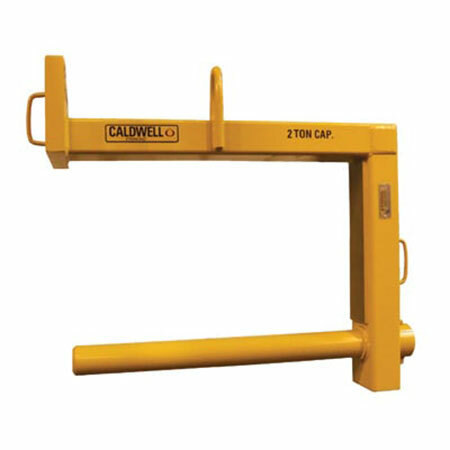
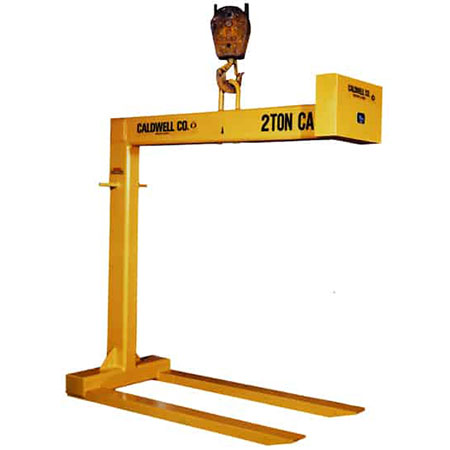
Below-the-hook pallet lifters use rigid fork arms to support palletized loads from an overhead crane or hoist rather than a forklift. They allow the controlled movement of palletized material in facilities where floor-level access is restricted, where crane positioning is required, or where loads need to be placed at heights a forklift cannot safely reach.
We’re Here to Help
Fulcrum lifting is dedicated to delivering top-line quality products, building professional relationships with our customers, providing superior product knowledge, and offering industry specific services to exceed the needs of our customers.
Product NotificationsWhere Below-the-Hook Lifters Get Used
If your operation runs an overhead crane, there is a good chance you need a below-the-hook lifter. These devices are used across a wide range of industries and applications, including:
- Steel service centers and metal processing: Coil lifters, roll lifters, and sheet lifters support high-cycle handling where pick consistency and surface protection are both critical.
- Structural steel and construction: Spreader beams and lifting beams handle long loads, structural sections, and precast panels that require controlled load geometry throughout the lift.
- Manufacturing and fabrication: Lifting tongs and pallet lifters keep material moving efficiently through the floor without relying solely on forklifts for every move.
- Pipeline and utilities: Pipe lifters provide a stable, surface-protecting hold on pipe of varying diameters during installation, staging, and yard handling.
- Highway construction and infrastructure: Concrete barrier lifters allow fast, repeatable placement and repositioning of precast barriers with no manual connections required at the load.
- Paper and textile mills: Roll lifters handle cores and mandrels through continuous production cycles without contact with the outer roll surface.
Not sure which device fits your application? Our team knows this equipment inside and out. We will help you identify the right lifter for your load, your crane, and your working conditions.

Your Partner in Lifting
Whether you're lifting steel plate, pipe, coils, or structural members, choosing the right below-the-hook device comes down to your load, your crane, and how your operation runs. If you're not sure where to start, our team can help. We'll work through the application with you and point you toward the right device for the job.
Getting the right below-the-hook device is only part of the equation. Fulcrum Lifting backs every product we sell with services that help keep your equipment and your team ready to work.
Rigging Gear Inspections
Below-the-hook lifting devices are subject to ASME B30.20 inspection requirements covering every-lift, frequent, and periodic intervals. Our inspections verify your devices are OSHA- and ASME-compliant, document the condition of your equipment, and help you identify wear or damage before it leads to downtime or a safety incident.

Services
Fulcrum Lifting offers a variety of services related to rigging gear and equipment to help ensure safe and efficient lifting operations.
Learn more
Industries
Although we service a niche market, our products and services can be utilized in a vast number of industries. We think of rigging applications anytime we observe the movement or securement of materials – which is just about everywhere.
Learn more